
Can You Cook Raw Food? It’s Dangerous for More Than One Reason — Homemade Meals and Balanced Nutrition
We’ve heard this question a lot recently, so it’s worth going over again for everyone’s safety: can you cook your dog’s raw food?
Before you put a raw meal in the pan or microwave, check the pack. A food designed to be fed raw is not automatically suitable for cooking, especially if it contains bone. And if you decide to make your own meals instead, getting the nutritional balance right matters just as much as choosing the ingredients.

Why cooked bones are a problem
Many raw minces contain bone, even when you cannot see individual pieces. Cooking can make bones brittle, allowing them to break into sharp fragments that can cause choking or internal injury. That is why bone-containing raw meals should stay out of the pan and microwave unless the manufacturer explicitly confirms that the product is suitable for cooking.
You may have heard the warning, “Don’t give your dog chicken bones.” The point we’re highlighting here is cooked chicken bones. Never feed cooked chicken bones or other cooked bones. Keep roast-dinner leftovers and cooked carcasses out of reach, and do not cook whole raw bones.

A complete raw recipe is designed to be fed as directed
A food labelled “complete” is intended to provide the nutrients needed for the life stage stated on the pack when fed according to its instructions. Cooking can change nutrient levels, and draining cooking juices can remove nutrients too. You cannot assume that a complete raw food will remain nutritionally balanced after cooking it.
Also check whether your food is labelled complete or complementary. Some meat, bone and offal mixes are complementary foods and are not a complete diet on their own. The word “raw” does not tell you whether a recipe is nutritionally complete.
The microwave is not a thawing shortcut
Microwaving can heat unevenly, partly cooking a meal while leaving other areas cold. Defrost raw food in a sealed container in the fridge, away from food for people, and follow the manufacturer’s storage and use-by instructions. If you are unsure how to prepare a particular product, check with its manufacturer before changing the method.
“Fine, I won’t cook raw dog food. I’ll just make up my own recipe. What’s wrong with that?”
It is an understandable thought. Meat, vegetables and a few extras can look like a wholesome dinner. But a bowl that looks healthy is not necessarily a balanced diet. Dogs need the right amounts and proportions of protein, fats, vitamins and minerals for their age, health and life stage.

A dog may appear well while eating an unbalanced diet, even as nutritional problems develop. Repeatedly missing essential nutrients, or providing too much of others, can eventually cause serious harm. A dull coat or digestive upset may be signs that something is wrong, but these symptoms have many possible causes and need veterinary assessment.
There is no reliable “fine for two years, ill in year three” rule. Problems can develop sooner or later, depending on the diet and the individual dog. Looking well in the first few weeks or months does not prove that a recipe meets long-term needs.

Organs are valuable — but more is not always better
Organs supply useful nutrients, but adding them by eye does not balance a meal. Too much liver, for example, can lead to excessive vitamin A intake. Adding a general vitamin or mineral supplement without knowing what the recipe needs can also create an excess or leave important gaps.
If you want to feed homemade meals, use a recipe formulated for your dog by a qualified veterinary nutritionist. Follow the specified ingredients, quantities, preparation method and supplements exactly, and arrange a review when your dog’s needs change.
Want to feed cooked food instead?
Dogs can eat a suitable, complete cooked diet. Choose a food designed for that purpose, or a properly formulated homemade recipe, rather than simply cooking a raw mix. The key is that the finished meal is appropriate and nutritionally balanced for your dog.
A little care at every mealtime
Raw meat can carry harmful bacteria, and freezing does not reliably remove them. Wash your hands after handling it, clean bowls and utensils thoroughly, and keep preparation surfaces separate from food for people. Ask your vet whether raw feeding is suitable for your dog and household, especially where anyone is very young, older, pregnant or has a weakened immune system.

Unsure about the pack in your freezer? Message us with the brand and recipe, or pop in and speak to the All Raw team. We can help you find the manufacturer’s feeding and preparation instructions.
All Raw 🐾
Further reading
- Natures Menu: product preparation and feeding FAQs
- RSPCA: looking after your dog’s teeth and cooked-bone safety
- UC Davis: nutritional balance in homemade dog food
- Merck Veterinary Manual: nutritional requirements of dogs and cats
- PDSA: raw diets and safe food handling
Bella & Duke: how is a complete food different from 80:10:10?
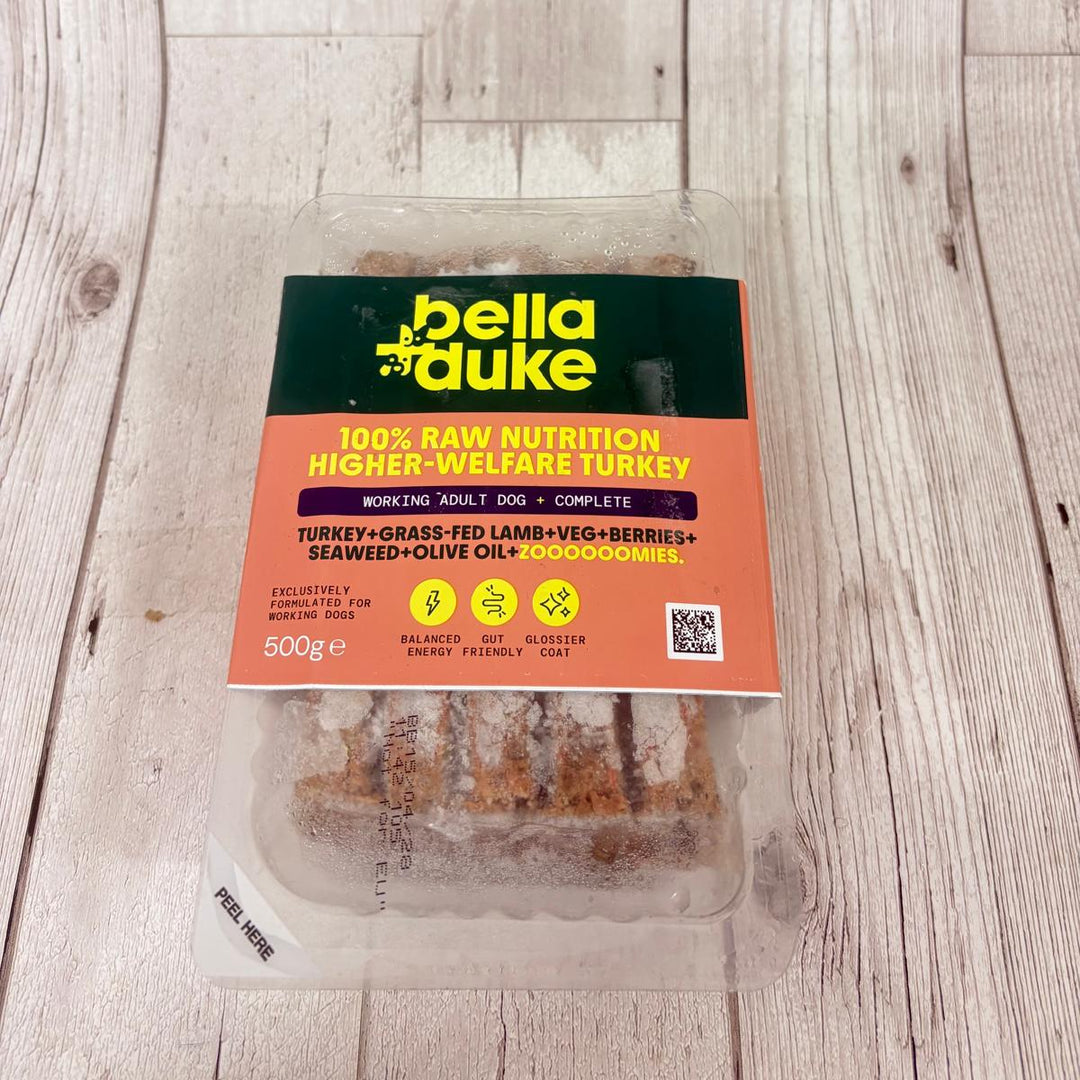
Bella & Duke Adult Turkey Complete Working Dog Food — 500g
A complete and balanced raw turkey meal for adult working dogs, ready to portion and serve according to the pack’s feeding instructions. An example of a formulated complete food, rather than relying on an 80:10:10 ingredient ratio alone.
For an option that takes the guesswork out of balancing a raw meal, we stock Bella & Duke complete and balanced raw dog food. Choose a recipe labelled complete for your dog’s life stage and follow its feeding instructions.
80:10:10 describes ingredient proportions: typically 80% muscle meat, 10% bone and 10% secreting organs, often split into 5% liver and 5% other organs. Those percentages alone do not tell you whether every essential vitamin and mineral is present in the right amount.
A complete recipe is formulated around the finished food’s nutritional requirements, rather than simply matching those three percentages. Bella & Duke’s complete recipes combine meat, bone and organs with other ingredients to provide balanced nutrition; the exact ingredients and proportions vary by recipe.
So check the complete or complementary statement on the pack, not just the ratio. An 80:10:10 recipe is not automatically incomplete, but the ratio alone does not prove completeness. A complementary mince needs to be used within a properly balanced diet. Bella & Duke’s raw meals should still be served as directed, rather than cooked.